![[Background image] [CI] Blue sky and buildings](https://carmignac.imgix.net/uploads/NextImage/0001/05/CI_WEB.jpg?auto=format%2Ccompress&crop=faces&fit=crop&w=3840)
Carmignac Portfolio Investissement: Letter from the Fund Manager - Q3 2025
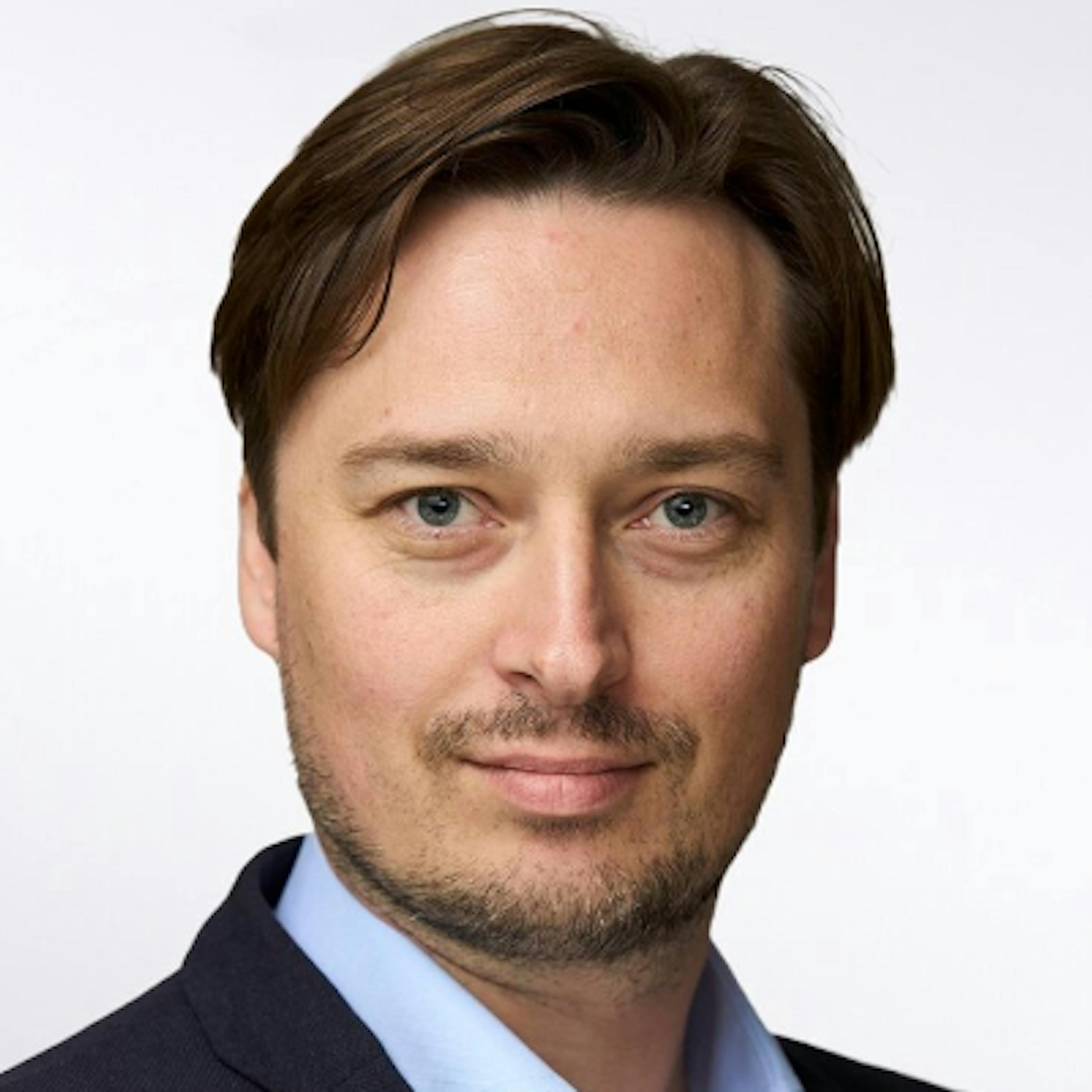
During the third quarter of 2025, Carmignac Portfolio Investissement delivered a robust return of +7.9%, outperforming its reference indicator, which posted a gain of +7.5%. Year-to-date, the Fund has achieved a positive performance of +11.0%, compared to +4.4% for its reference indicator.
Market environment
In the third quarter, equity markets surged, supported by the Federal Reserve’s monetary policy easing, reduced trade tensions following agreements between the US and Europe/Japan, the passage of the One Big Beautiful Bill Act in the United States, and a broadly solid corporate earnings season. Investors largely chose to overlook signs of a moderate economic slowdown in the United States and Europe, persistent inflation above central bank targets, widening public deficits, and ongoing geopolitical tensions.
US markets continued to be buoyed by the ongoing enthusiasm around artificial intelligence (AI). The momentum was sustained by significant investments from hyperscalers, robust corporate earnings, and a surge in deals and partnerships across the infrastructure and cloud computing sectors.
Emerging markets outperformed, driven by strong performance in Asia. Chinese indices rebounded sharply after a prolonged period of underperformance, supported by new stimulus measures from Beijing, and a renewed appetite for Chinese tech. Korean equities also benefited from growing investor interest in AI and computing infrastructure, amid announcements of structural reforms in the country—particularly in corporate governance.
In contrast, European markets underperformed over the period, weighed down by a weaker-than-expected macroeconomic environment, the appreciation of the euro, tariffs, and heightened political uncertainty, notably in France.
How did we fare in this context?
During the quarter, the Fund outperformed its reference indicator, primarily driven by strong stock selection in the technology sector and, to a lesser extent, in the industrial sector.
The Fund benefited from its diversified exposure to the technology space, encompassing the entire value chain across regions and market capitalisations. Alphabet was the main contributor to performance, driven by excellent second-quarter 2025 results. In addition, the company benefited from the continued expansion of its cloud operations, accelerated integration of AI across its businesses and a benign outcome in an antitrust case. Our positions in Taiwan—both in semiconductor foundries through TSMC and in printed circuit board components via Elite Material and Lotes—also made a significant contribution. Additional positive drivers included several US names such as Nvidia, Arista Networks, and Amphenol.
In the industrial sector, performance was supported by holdings in companies exposed to the electrification theme. Prysmian delivered solid gains, benefiting from accelerating electrification trends, the relocation of production to the United States, and rising demand for high-voltage connectors linking offshore wind farms to power grids. Comfort Systems, a leader in building services—including mechanical, electrical, plumbing, and automation systems, rose more than 50% over the quarter.
Conversely, the healthcare sector was the main area of disappointment. Beyond the sector’s overall weakness, stock selection had a negative impact, particularly through positions in Centene, Novo Nordisk, and Lantheus.
Outlook
The macroeconomic environment remains favourable for equity markets. Central banks are maintaining broadly accommodative monetary policies, US growth could accelerate in 2026, and the earnings outlook for next year remains encouraging. However, with US indices at historic highs, valuations appear elevated. That said, these levels, although stretched, do not in themselves constitute a factor for correction. We remain particularly attentive to two factors: the evolution of real interest rates and the dynamics of investment in AI. Both currently show no signs of immediate risk but warrant close monitoring.
Investment in AI continues to grow at a sustained pace: spending by the major players in the sector (‘hyperscalers’) is expected to grow by nearly 50% in 2025 and then by 20% in 20264, supported by innovation and the considerable productivity gains it generates. In addition, new players should be adding to compute capex, such as Oracle, Coreweave, or Xai.
However, some less profitable technology segments are now showing signs of excess. We therefore favour a balanced approach: geographical diversification, vigilance on valuations and a focus on profitable companies, which are often still immune to the excesses of enthusiasm surrounding AI.
During the quarter, we gradually took profits on our main performance contributors, such as TSMC, Nvidia and SK Hynix, in order to maintain a stable target weighting within the portfolio, and reduced holdings in companies such as Broadcom and Comfort Systems. At the same time, we increased our exposure to the software segment (Salesforce, ServiceNow, GitLab), which has lagged behind the rest of the sector.
We also increased our positions in sectors that had been left out of the recent market rally, including certain financial companies unfairly perceived as threatened by AI (Tradeweb, S&P Global, Intercontinental Exchange).
In the healthcare sector, after several months of underperformance, we took advantage of recent declines to strengthen positions in companies such as Alcon and Align Technology.
We believe that strengthening laggards with attractive valuations is the best strategy for tempering current excess optimism while remaining exposed to the current positive momentum.

Carmignac Portfolio Investissement F EUR Acc
- Recommended minimum investment horizon
- 5 years
- Risk indicator*
- 4/7
- SFDR - Fund Classification**
- Article 8
*Risk Scale from the KID (Key Information Document). Risk 1 does not mean a risk-free investment. This indicator may change over time. **Sustainable Finance Disclosure Regulation (SFDR) 2019/2088. The SFDR classification of the Funds may change over time.
Main risks of the fund
Fees
- Entry costs
- We do not charge an entry fee.
- Exit costs
- We do not charge an exit fee for this product.
- Management fees and other administrative or operating costs
- 1.15% of the value of your investment per year. This estimate is based on actual costs over the past year.
- Performance fees
- 20.00% when the share class overperforms the Reference indicator during the performance period. It will be payable also in case the share class has overperformed the reference indicator but had a negative performance. Underperformance is clawed back for 5 years. The actual amount will vary depending on how well your investment performs. The aggregated cost estimation above includes the average over the last 5 years, or since the product creation if it is less than 5 years.
- Transaction Cost
- 0.39% of the value of your investment per year. This is an estimate of the costs incurred when we buy and sell the investments underlying the product. The actual amount varies depending on the quantity we buy and sell.
Performance
| Carmignac Portfolio Investissement | +11.0 | +26.2 | +20.2 | −17.4 | +5.2 | +35.3 | +25.8 | −13.5 | +5.4 | +2.8 |
| Reference Indicator | +4.4 | +25.3 | +18.1 | −13.0 | +27.5 | +6.7 | +28.9 | −4.8 | +8.9 | +11.1 |
| Carmignac Portfolio Investissement | +20.0% | +11.2% | +9.4% |
| Reference Indicator | +15.9% | +13.5% | +11.3% |
Source: Carmignac at Sep 30, 2025.
Past performance is not necessarily indicative of future performance. Performances are net of fees (excluding possible entrance fees charged by the distributor). The Fund presents a risk of loss of capital.
The return may increase or decrease as a result of currency fluctuations, for the shares which are not currency-hedged.
Reference Indicator: MSCI AC World NR index
This document is issued by, or communicated on behalf of, Carmignac Middle East Ltd, a company incorporated under the laws of the Dubai International Financial Centre with company number CL 13413 registered at GD-PB-04-01-OF-01-0, Level 1, DIFC Fund Centre, Level POD, Gate District Precinct Building 04, Dubai International Financial Centre, Dubai, United Arab Emirates and regulated by the Dubai Financial Services Authority under reference number F013638.
This document is intended solely for Professional Clients and Market Counterparties, as defined under the applicable rules of the Dubai Financial Services Authority (“DFSA”). It must not be relied upon by, or distributed to, Retail Clients or any other person.
The fund(s) referred to in this document are foreign fund(s) domiciled and regulated in Luxembourg by the Commission de Surveillance du Secteur Financier (“CSSF”). Carmignac Portfolio refers to the sub-funds of Carmignac Portfolio SICAV, an investment company under Luxembourg law, conforming to the UCITS Directive. Carmignac Private Evergreen refers to the Private Evergreen sub-fund of the SICAV Carmignac S.A. SICAV – PART II UCI, registered with the Luxembourg RCS under number B285278. Unless expressly stated otherwise, they are not domiciled in, authorised by, or subject to regulation or approval by the DFSA. The DFSA has not approved, reviewed or verified this document, the prospectus or any other fund documentation, and the authority does not accept responsibility for the information contained in them or for the merits of an investment in the fund(s).
This document is provided for information purposes only. It does not constitute investment advice, a recommendation, or an offer or solicitation to buy or sell any financial instrument or fund interest. Any investment decision should be made solely on the basis of the applicable legal offering documents, including the prospectus and, where applicable, the key information document, and after obtaining independent professional advice as appropriate. The information contained in this material may be partial information and may be modified without prior notice. They are expressed as of the date of writing and are derived from proprietary and non-proprietary sources deemed by Carmignac to be reliable, are not necessarily all-inclusive and are not guaranteed as to accuracy. As such, no warranty of accuracy or reliability is given and no responsibility arising in any other way for errors and omissions (including responsibility to any person by reason of negligence) is accepted by Carmignac, its officers, employees or agents.
Access to the Funds may be subject to restrictions regarding certain persons or countries. This material is not directed to any person in any jurisdiction where (by reason of that person’s nationality, residence or otherwise) the material or availability of this material is prohibited. Persons in respect of whom such prohibitions apply must not access this material. Taxation depends on the situation of the individual. The Funds are not registered for retail distribution in Asia, in Japan, in North America, nor are they registered in South America. Carmignac Funds are registered in Singapore as restricted foreign scheme (for professional clients only). The Funds have not been registered under the US Securities Act of 1933. The Funds may not be offered or sold, directly or indirectly, for the benefit or on behalf of a «U.S. person», according to the definition of the US Regulation S and FATCA. The risks, fees and ongoing charges are described in the KID (Key Information Document). The KID must be made available to the subscriber prior to subscription. Prospective investors should read the fund's prospectus/KID and consult their own advisers before making any investment decision. Investors may lose some or all their capital, as the capital in the funds is not guaranteed.
Investment in the fund(s) involves risk, including possible loss of capital. The value of investments and income may go down as well as up, and investors may not recover the amount originally invested. Past performance is not a reliable indicator of future results. Performances are net of fees (excluding possible entrance fees charged by the distributor). The return may increase or decrease as a result of currency fluctuations, for the shares which are not currency-hedged. Any target, forecast, projection or forward-looking statement is based on assumptions and is not a guarantee of future performance or return.
Reference to certain securities and financial instruments is for illustrative purposes to highlight stocks that are or have been included in the portfolios of funds in the Carmignac range. This is not intended to promote direct investment in those instruments, nor does it constitute investment advice. The Management Company is not subject to prohibition on trading in these instruments prior to issuing any communication. The portfolios of Carmignac funds may change without previous notice.
The reference to a ranking or prize, is no guarantee of the future results of the UCITS or the manager.
Morningstar Rating™: © Morningstar, Inc. All Rights Reserved. The information contained herein: is proprietary to Morningstar and/or its content providers; may not be copied or distributed; and is not warranted to be accurate, complete or timely. Neither Morningstar nor its content providers are responsible for any damages or losses arising from any use of this information.
Funds classified as Article [8/9] products under the EU Sustainable Finance Disclosure Regulation (“SFDR”) are subject to an EU classification only, and does not represent a label, approval or endorsement by the Dubai Financial Services Authority or any UAE authority. Funds that pursue ESG related objectives alongside financial objectives do so without any guarantee that such ESG objectives will be achieved. ESG data and indicators may be based on third party sources, estimates and evolving methodologies and should not be viewed as a precise or comprehensive measure of sustainability performance.
The fund(s) may be subject to investment, market, liquidity, currency, credit, counterparty, concentration and other risks as described in the applicable offering documents. Prospective investors should conduct their own due diligence and carefully consider the risks, investment objectives, costs and suitability of an investment before making any decision.
The Management Company can cease promotion in your country anytime. Investors have access to a summary of their rights at section 5 entitled "summary of investor rights" at the following link: https://www.carmignac.com/en-ae/regulatory-information