
The world according to Trump
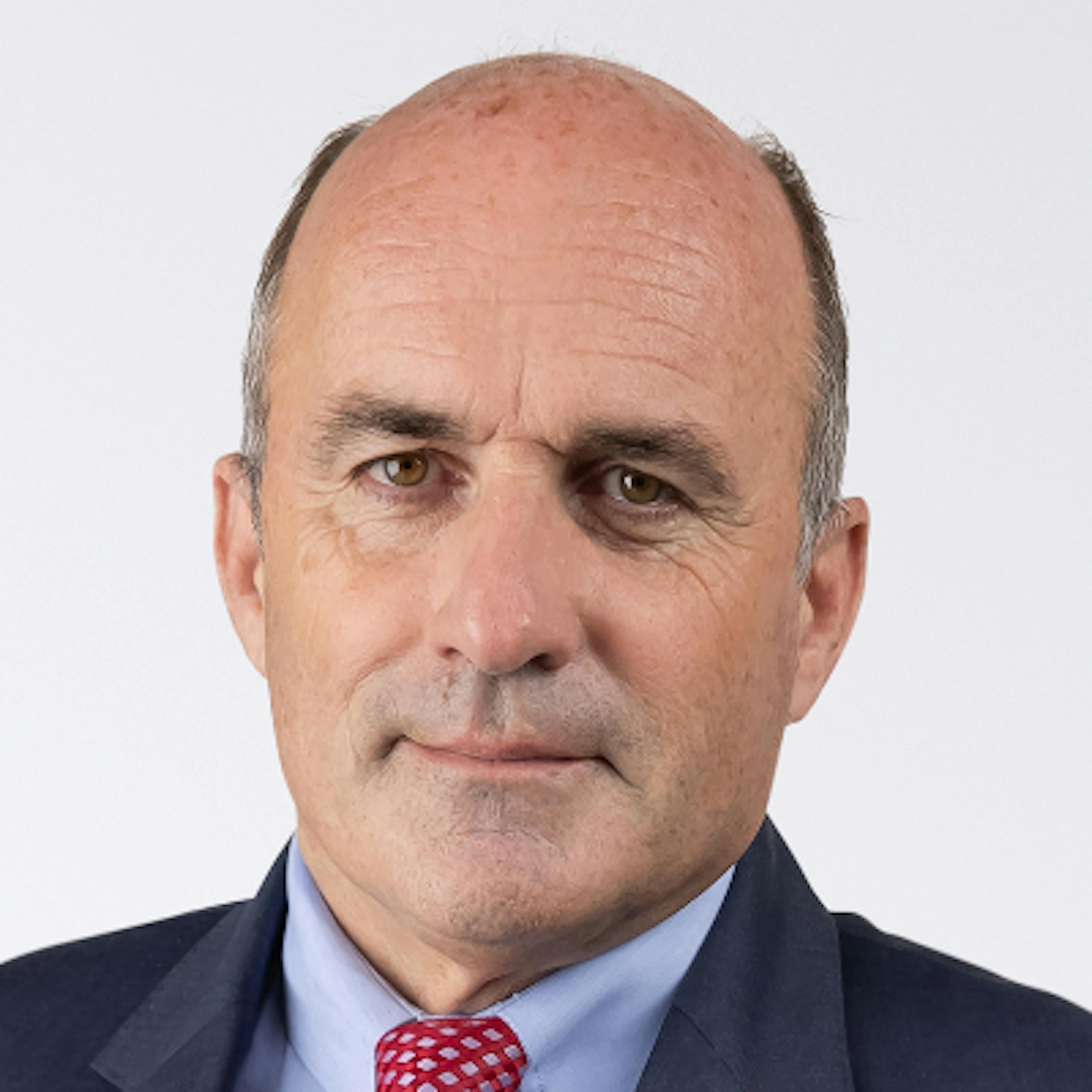
Trump’s hostile takeover bid for the Fed could reflect his true economic-policy aim: strong nominal GDP growth to absorb the country’s debt?
Almost all of the many political and economic events that have occurred this year have Donald Trump’s fingerprints on them. The omnipotent US president is keeping his campaign promises, despite how outlandish some of them are. What’s more, he’s gotten carried away by his own momentum and set additional goals for his term of office. As the autumn gets under way, we’ll try to elucidate the reasoning behind Trump’s actions. Our analysis will point to just one of several possible explanations – and in no way aims to predict what the future may actually hold.
2025 kicked off with DeepSeek Day, which served as a reminder that artificial intelligence (AI) can also be developed (at least to some extent) outside the US – in this case, China. That rattled stock markets in the developed world; Nvidia lost over 40% of its value between January and April, before bouncing back and nearly doubling its market cap over the subsequent four months. Today, investors’ enthusiasm for AI is just as strong as ever, with other investment themes left to pick up the crumbs. Trump has nothing to do with the AI wave, which is sweeping away everything in its path – everything, that is, except Trump!
Then came Zelensky Day, when the Trump administration humiliated the Ukrainian president live on television, forcing Germany to take its military and economic fate into its own hands. America is no longer our friend! While Europe was shaken by these developments, its institutions proved to be too stiff and unwieldy to take any real action. A few days later, we were introduced to Liberation Day, which left the whole world wondering what happened – who has the right to put an end to the happy period of globalisation? The new US tariffs went into effect in July. Trump didn’t chicken out1; he simply practiced The Art of the Deal, the secrets to which he’s sold over 1.1 million copies2. By first stunning his counterparties with the threat of a 60% tariff, he was able to get them to accept a 15% rate without much trouble or even resistance. In the end, it was the stern Ms. Von der Leyen who retreated. China realised that its exports would be targeted more heavily and promised to combat the deflationary pressure that its manufacturing overcapacity has been putting on the rest of the world and its own economy. In the early summer, the US army bombed Iran’s nuclear facilities without provoking unrest in the Middle East. Amid these brazen events, US immigration was halted in its tracks, oil prices dropped, the US dollar weakened, and US tax cuts and deregulation became an ever-closer reality. Trump is implementing his campaign promises – except for the one where he would put an end to the war in Ukraine in 24 hours. Putin is standing firm against Trump and “conspiring” with Xi and Modi. A new geopolitical order is taking shape.
But the US president isn’t stopping at his campaign promises. He has also dismissed high-level civil servants who haven’t sufficiently adhered to his cause, and has taken free stakes in companies receiving government subsidies. After Intel, will defence-industry firms be his next victim, as he looks for new sources of government revenue, on top of the tariff proceeds, to fund the upcoming tax cuts? Yet Trump’s most iconoclastic and potentially most impactful move is his attempt to take control of the US Federal Reserve (Fed) so that he can steer monetary policy, taking his cue from how things work in many emerging markets. What could be driving this act of lese-majesty against an institution that everyone – except Trump – wants to remain independent? The current US president was elected mainly on his attacks against “Biden inflation.” Yet putting aside his efforts to lower oil prices – whose effects now seem to be behind us – a striking pattern emerges. The Trump-engineered drop in the dollar is inflationary; the relocation of large foreign manufacturers to the US and deglobalisation are inflationary; the upswing in German investment and China’s policy to combat deflation are inflationary; the halt to US immigration, the higher tariffs, and the nationalisation of businesses are stagflationary3; and most of all, Trump’s taking control of the Fed will be inflationary, because it’s hard to imagine that a central bank under his influence would implement a tight monetary policy intended to dampen US economic growth. How should we interpret the American president’s all-out economic activism, when so many observers dismiss it outright as devoid of substance?
During the Pax Americana4, United States’ allies received trade security and military protection in exchange for funding the twin deficits caused by the country’s “generosity.” But now, that system is no longer working for the US middle class. The economy has been running at full employment for quite some time, but middle-class disposable incomes have been stagnating for decades and many Trump supporters are people whose socioeconomic status has declined: the downside of globalisation. Trump’s strategy appears to be to insulate the country and orchestrate strong nominal GDP growth through a combination of real GDP growth and higher inflation. His new economic paradigm could have the advantage of reducing the country’s debt-to-GDP ratio, which drifted upwards during the long period of weak economic growth and rock-bottom interest rates. Here, it’s worth bearing in mind the words of Scott Bessent5: “President Trump understands that national strength comes from the ground up [Main Street] (…) Wall Street can continue to grow and do well.” His goal seems to be to boost consumers’ purchasing power rather than send stock markets soaring, creating a dynamic similar to that during the Trente Glorieuses in France when inflation didn’t prevent the middle class from prospering. Time will tell if that assessment is right. We’ll be able to gauge the success – or failure – of Trump’s explosive economic policy by how quickly the dollar drops and US Treasury yields rise.
1Many people believed Trump would back down between Liberation Day in April, when he threatened the 60% tariffs, and when the 15% rate actually went into effect.
2Source: CBS News, 2016.
3Stagflation refers to a period of stagnant GDP growth coupled with high inflation.
4Pax Americana refers to the period of relative global stability under the United States' hegemonic dominance since the end of World War II, analogous to the Pax Romana during the Roman empire.
5The US Secretary of State, speaking at the American Bankers Association Washington Summit, Washington DC, 9 April 2025.

This document is issued by, or communicated on behalf of, Carmignac Middle East Ltd, a company incorporated under the laws of the Dubai International Financial Centre with company number CL 13413 registered at GD-PB-04-01-OF-01-0, Level 1, DIFC Fund Centre, Level POD, Gate District Precinct Building 04, Dubai International Financial Centre, Dubai, United Arab Emirates and regulated by the Dubai Financial Services Authority under reference number F013638.
This document is intended solely for Professional Clients and Market Counterparties, as defined under the applicable rules of the Dubai Financial Services Authority (“DFSA”). It must not be relied upon by, or distributed to, Retail Clients or any other person.
The fund(s) referred to in this document are foreign fund(s) domiciled and regulated in Luxembourg by the Commission de Surveillance du Secteur Financier (“CSSF”). Carmignac Portfolio refers to the sub-funds of Carmignac Portfolio SICAV, an investment company under Luxembourg law, conforming to the UCITS Directive. Carmignac Private Evergreen refers to the Private Evergreen sub-fund of the SICAV Carmignac S.A. SICAV – PART II UCI, registered with the Luxembourg RCS under number B285278. Unless expressly stated otherwise, they are not domiciled in, authorised by, or subject to regulation or approval by the DFSA. The DFSA has not approved, reviewed or verified this document, the prospectus or any other fund documentation, and the authority does not accept responsibility for the information contained in them or for the merits of an investment in the fund(s).
This document is provided for information purposes only. It does not constitute investment advice, a recommendation, or an offer or solicitation to buy or sell any financial instrument or fund interest. Any investment decision should be made solely on the basis of the applicable legal offering documents, including the prospectus and, where applicable, the key information document, and after obtaining independent professional advice as appropriate. The information contained in this material may be partial information and may be modified without prior notice. They are expressed as of the date of writing and are derived from proprietary and non-proprietary sources deemed by Carmignac to be reliable, are not necessarily all-inclusive and are not guaranteed as to accuracy. As such, no warranty of accuracy or reliability is given and no responsibility arising in any other way for errors and omissions (including responsibility to any person by reason of negligence) is accepted by Carmignac, its officers, employees or agents.
Access to the Funds may be subject to restrictions regarding certain persons or countries. This material is not directed to any person in any jurisdiction where (by reason of that person’s nationality, residence or otherwise) the material or availability of this material is prohibited. Persons in respect of whom such prohibitions apply must not access this material. Taxation depends on the situation of the individual. The Funds are not registered for retail distribution in Asia, in Japan, in North America, nor are they registered in South America. Carmignac Funds are registered in Singapore as restricted foreign scheme (for professional clients only). The Funds have not been registered under the US Securities Act of 1933. The Funds may not be offered or sold, directly or indirectly, for the benefit or on behalf of a «U.S. person», according to the definition of the US Regulation S and FATCA. The risks, fees and ongoing charges are described in the KID (Key Information Document). The KID must be made available to the subscriber prior to subscription. Prospective investors should read the fund's prospectus/KID and consult their own advisers before making any investment decision. Investors may lose some or all their capital, as the capital in the funds is not guaranteed.
Investment in the fund(s) involves risk, including possible loss of capital. The value of investments and income may go down as well as up, and investors may not recover the amount originally invested. Past performance is not a reliable indicator of future results. Performances are net of fees (excluding possible entrance fees charged by the distributor). The return may increase or decrease as a result of currency fluctuations, for the shares which are not currency-hedged. Any target, forecast, projection or forward-looking statement is based on assumptions and is not a guarantee of future performance or return.
Reference to certain securities and financial instruments is for illustrative purposes to highlight stocks that are or have been included in the portfolios of funds in the Carmignac range. This is not intended to promote direct investment in those instruments, nor does it constitute investment advice. The Management Company is not subject to prohibition on trading in these instruments prior to issuing any communication. The portfolios of Carmignac funds may change without previous notice.
The reference to a ranking or prize, is no guarantee of the future results of the UCITS or the manager.
Morningstar Rating™: © Morningstar, Inc. All Rights Reserved. The information contained herein: is proprietary to Morningstar and/or its content providers; may not be copied or distributed; and is not warranted to be accurate, complete or timely. Neither Morningstar nor its content providers are responsible for any damages or losses arising from any use of this information.
Funds classified as Article [8/9] products under the EU Sustainable Finance Disclosure Regulation (“SFDR”) are subject to an EU classification only, and does not represent a label, approval or endorsement by the Dubai Financial Services Authority or any UAE authority. Funds that pursue ESG related objectives alongside financial objectives do so without any guarantee that such ESG objectives will be achieved. ESG data and indicators may be based on third party sources, estimates and evolving methodologies and should not be viewed as a precise or comprehensive measure of sustainability performance.
The fund(s) may be subject to investment, market, liquidity, currency, credit, counterparty, concentration and other risks as described in the applicable offering documents. Prospective investors should conduct their own due diligence and carefully consider the risks, investment objectives, costs and suitability of an investment before making any decision.
The Management Company can cease promotion in your country anytime. Investors have access to a summary of their rights at section 5 entitled "summary of investor rights" at the following link: https://www.carmignac.com/en-ae/regulatory-information