
Carmignac Absolute Return Europe: Letter from the Fund Managers
Dear Investors,
The fourth quarter was the first full quarter as new managers of the Carmignac Absolute Return Europe fund. During the last quarter, the return of the Fund (A share class) was +2.44%, while for the calendar year the fund registered a performance of +0.01%.
The last quarter of the year proved to be a period of extreme volatility for capital markets across all asset classes driven largely by macro factors, most notably central bank policy communication and inflation data. An acceleration of the selling pressure which began in July saw October produce the worst market performance of the year. This was led by a toxic combination of bond yields temporarily bursting through 5%, a level not hit since 2007, weakening macro data in Europe and a rise in geopolitical tension in the Middle East. As we moved into November, the picture began to change, as the inflation data began to show a material decline. This decline was significant enough to catalyze a drop in the US 10-year yield by 65bps, which was the largest one day drop since 2008. This led investors to believe that the Federal Reserve (Fed) and other central banks were done on rate rises and what followed was a significant tightening of credit spreads and a highly rotational rally in equities, driven by aggressive short covering. The rally continued through December, as inflation data continued to surprise to the downside driving bond yields down below 4%, effectively to where they were in February and pushing equity prices higher.
Q4 was the first full quarter for us as new managers of the Fund and we are pleased to be able to report 3 consecutive months of positive returns in what have been incredibly volatile and challenging market conditions. In October, we produced a positive return of +94 bps during the sell-off with a very positive contribution from our short book and portfolio hedging. In November, with an improving inflation picture we had to make significant changes to the portfolio, covering shorts and adding longs in names that we thought would benefit from lower rates and improving market sentiment which saw us move from flat/slightly short to a net long position. This was achieved by adding exposure to Industrials, Technology, Real Estate and Construction. December saw a continuing pattern with equity markets continuing to rally to new highs, following the pivot from the Fed indicating that the rate tightening cycle was over and that the next policy move would be cuts.
Looking into the portfolio, the largest positive portfolio contributions for the quarter came from Industrials, Technology, Communications Services and Materials. All sectors in our portfolio produced a positive return over the quarter with the exception of Healthcare, which was a small laggard. At the stock level, our largest winners and losers were:
Winners - a combination of longs and shorts
- Microsoft Long - positive numbers and a key beneficiary of the Artificial Intelligence (AI) theme.
- ASML Long - beneficiary of reshoring the semiconductor industry.
- Meta Long - improving top line growth and margins.
- French capital goods short - significant profits warning.
- German healthcare service provider short - potential negative impact of GLP-1 drugs.
Losers - mainly shorts impacted by short covering rally
- Swiss semiconductor equipment short - improving sentiment despite stratospheric valuation.
- Swiss MedTech - short covering.
- Consumer tech short - rallied despite disappointing numbers.
- Dutch MedTech short - short covering.
- Prada - negative sentiment on luxury / Chinese consumer spending.
Markets have now run very hard into year end and are now pricing in a Goldilocks scenario of significant rate cuts for 2024 alongside a soft landing. This is driven by anticipation of a further fall in inflation, ongoing relatively full employment, and no recession.
While it is highly likely that there will be interest rate cuts in 2024, we suspect that too much optimism is priced in too soon. Therefore, in the short term, we believe there is a possibility of some disappointment regarding the timing of monetary easing and that the first rate cuts may occur in March or May. Meanwhile, the economic data is continuing to deteriorate as the impact of previous significant interest rate increases is finally beginning to feed through into the economy. Even the highly resilient US economy is seeing softness in industrial activity with new order data in decline. Similarly, European data is suggesting we could be heading back to a period of no growth and potentially outright deflation.
Even if a new cycle of interest rate cuts should support an economic recovery during 2024, the positive effects may not become apparent until the second half of the year and the degree of interest rate cuts will be determined by the pace of economic slowdown, which is a risk to the earnings outlook, therefore it is important to be mindful of why rates will eventually be cut. If they are solely driven by a decline in inflation expectations while economic growth expectations remain steady, then clearly the markets will welcome that and at worst, the risk might be for some short-term consolidation after a strong 2023 year end run. However, if rate cuts come due to further deteriorating economic data, weaker corporate earnings outlook, the risk for markets is skewed to the downside, particularly in the short term, in our opinion.
Currently the data is mixed, economic indicators are weak, but so far corporate earnings have held up reasonably well. Therefore, we believe that corporate FY23 earnings announcements with 2024 outlook commentary will be a catalyst for markets and how individual stocks will trade in coming weeks/months. As such, in the short term we are inclined to tactically reduce our net exposures by locking in some of recent single stock gains from the November-December rally and add back to our single short book. Also, in early January, we will attend a couple of corporate conferences, where we will get the chance to meet with several European corporates which should help us form a stronger view around themes and individual stock positions.
For the year as a whole, 2024 should emerge to be a more ‘normal’ year. After 2-3 years of the world being impacted by covid, wars & unprecedented central bank and government interventions, all of which collectively caused so many industries falling out of sync with their normal cycles (supply chain disruptions, inventory corrections etc.), finally in 2024, cycles should again begin to align themselves to more historical patterns. This should be a good thing as it should add visibility, not only for how corporates can manage their own businesses, but also for us as investors. Having said that, we must recognize that 2024 could still be a year of further turbulence brought about by fluctuating economic fundamentals, pace of rate cuts, as well as heightened geopolitical risk due to increasing armed conflicts and many elections in a significant proportion of the world, either of which could lead to shifts in government policies.
Notwithstanding some of the short-term risks and the various challenges for 2024, we are very optimistic about the prospects for an Equity Long/short strategy like ours for the year ahead. Investors and asset allocators have now had to endure a long period of extreme uncertainty and volatility all caused by extreme events (Covid & Wars) and subsequent unprecedented central bank interventions. These events have caused considerable imbalances for financial markets, catalyzing significant flows between asset classes, which from hereon should normalize. Therefore, if rates have now peaked and will trend lower, it should be very supportive to equities again as an asset class and once the prospect and path to economic recovery emerges, spurred on by structural trends such as onshoring, de-globalization, AI and much else, it should make for a rich stock picking environment.
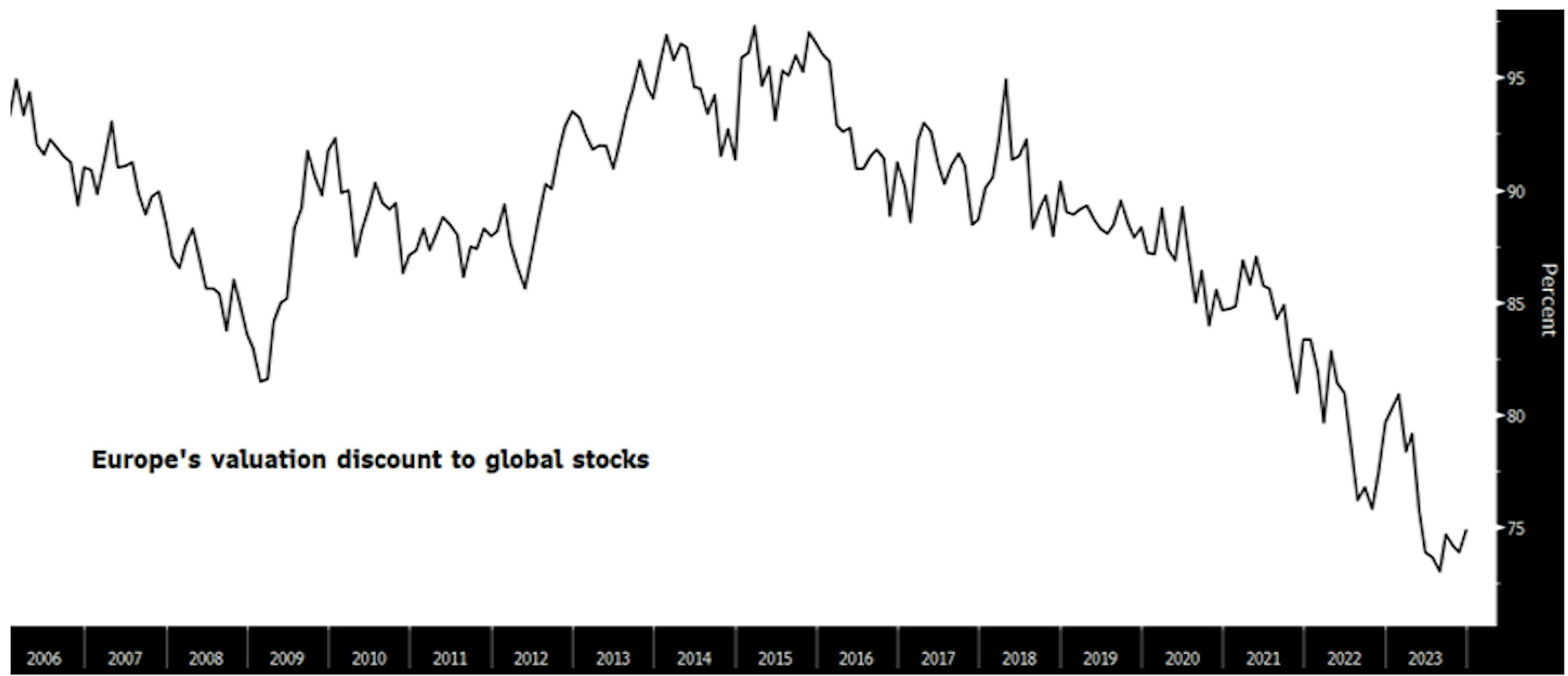
We believe that many of the structural trends within Technology (AI) & Healthcare (GLP1) will continue to dominate and these are areas we will continue to like and seek exposure to. But at the same time, we believe there are several very interesting trends and value opportunities to emerge in Europe. Whilst European equities have often traded at a discount to other Equity markets, just as they do yet again post the crisis (UK domestic equities in particular), with lower rates and eventually a recovery on the horizon, there should be plenty of opportunities. Therefore, once we have a clearer understanding of the economic backdrop and the short-term corporate earnings, we believe Europe offers an attractive starting point, with tons of potential for recovery.
Finally, we think it is important to remind our investors that as our investment strategy has no strong style biases and a truly opportunistic approach to how we invest, we are now coming out of these years dominated by some version of a crisis and we can be fully flexible to capture any new trends and opportunities emerging. We aim to deliver a steady and compounding return at relatively low volatility. This is our promise to our investors. Having just completed our first full quarter managing these funds at Carmignac and delivering returns in line with our targeted risk level, we are extremely confident in our ability to deliver for our investors in 2024 and the years ahead.
EU valuations discount to Global stocks.

Carmignac Absolute Return Europe
Carmignac Absolute Return Europe A EUR Acc
- Recommended minimum investment horizon
- 3 years
- Risk indicator*
- 2/7
- SFDR - Fund Classification**
- Article 8
*Risk Scale from the KID (Key Information Document). Risk 1 does not mean a risk-free investment. This indicator may change over time. **Sustainable Finance Disclosure Regulation (SFDR) 2019/2088. The SFDR classification of the Funds may change over time.
Main risks of the fund
Fees
- Entry costs
- 4.00% of the amount you pay in when entering this investment. This is the most you will be charged. Carmignac Gestion doesn't charge any entry fee. The person selling you the product will inform you of the actual charge.
- Exit costs
- We do not charge an exit fee for this product.
- Management fees and other administrative or operating costs
- 2.15% of the value of your investment per year. This estimate is based on actual costs over the past year.
- Performance fees
- 20.00% max. of the outperformance if the performance is positive and the net asset value exceeds the high-water mark. The actual amount will vary depending on how well your investment performs. The aggregated cost estimation above includes the average over the last 5 years, or since the product creation if it is less than 5 years.
- Transaction Cost
- 1.05% of the value of your investment per year. This is an estimate of the costs incurred when we buy and sell the investments underlying the product. The actual amount varies depending on the quantity we buy and sell.
Performance
| Carmignac Absolute Return Europe | −2.0 | −0.6 | +3.6 | +0.0 | −6.4 | +12.6 | +5.2 | −1.3 | +4.4 | +14.6 |
| Carmignac Absolute Return Europe | +1.0% | −1.5% | +3.3% |
Source: Carmignac at Oct 30, 2026.
Past performance is not necessarily indicative of future performance. Performances are net of fees (excluding possible entrance fees charged by the distributor). The Fund presents a risk of loss of capital.
The return may increase or decrease as a result of currency fluctuations, for the shares which are not currency-hedged.
Reference Indicator: -