
Why the emerging markets trade is nowhere near its end
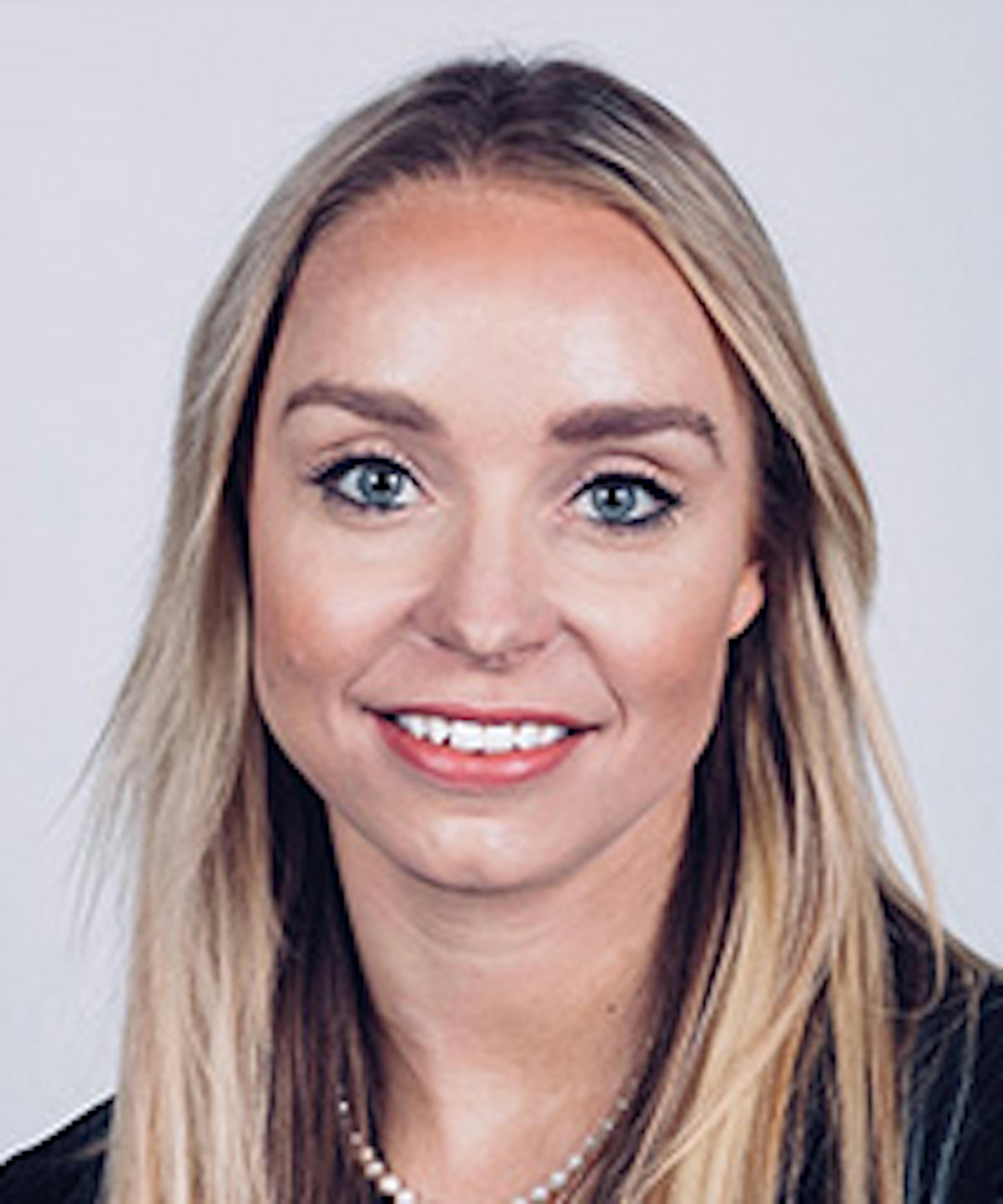
Naomi Waistell, co-fund manager of Carmignac Portfolio Emergents, argues the artificial intelligence (AI) build-out is not a single bottleneck but a series of them, with the opportunity migrating through cooling, power, connectivity and packaging as each constraint in turn hits its limit.
Is the AI trade getting too crowded?
Taiwan and South Korea now account for around half the MSCI Emerging Markets index after the share prices of the likes of SK Hynix and Samsung Electronics have each more than doubled over 20261 so far. The concentrated nature of that move has prompted a predictable question: is this trade getting too crowded?
Naomi Waistell, co-fund manager of the Carmignac Portfolio Emergents fund, recently attended the Computex technology conference in Taiwan, where Nvidia chief executive Jensen Huang delivered the keynote. What she observed there was a striking divergence in mood between Asian and European investors. "People in Asia have a mentality of: regardless of what happens, just buy," she said. "Investors in Europe are a bit more concerned."
Caution has a rational basis. Memory markets have been through this before: heavy capital expenditure commitments from manufacturers flood the market with supply; demand disappoints; prices fall sharply and stocks follow. The fear is that current AI enthusiasm is setting up a repeat of a cycle that has caught investors out more than once in the past.
AI build-out: a series of bottlenecks, not a single trade
However, Waistell argued: "This time is different. AI is not just one theme. Everything you need to support the whole AI infrastructure is in short supply. So even if memory becomes oversupplied, you will then need more cooling, because as compute power increases and requires more and more data centres, you need more cooling solutions."
The fund manager’s argument is that the AI build-out is not a single bottleneck but a series of them. As one constraint eases, another opens elsewhere in the infrastructure stack. Cooling systems hit capacity limits, then power supply, then connectivity chips, then back-end packaging. The opportunity migrates through the value chain rather than ending when any single component catches up with demand.
Two structural features reinforce the case for holding companies that have already risen sharply. The first is valuation. "If you look at the underlying numbers on the companies, their earnings growth is exceeding 200%2," Waistell said. "The price has gone up a lot, but it has followed at the same pace as earnings growth, so valuations are still reasonable."
The second is the nature of the commitments underpinning those earnings. "For the first time in history, these players are executing long-term agreements, which is good because it is providing good visibility," she explained.
SK Hynix and Nvidia have jointly committed to a co-investment arrangement, with Hynix chips built exclusively for Nvidia's AI hardware. That contractual certainty was absent from previous memory cycles and materially changes the risk profile of these positions.
Recycling capital across the AI value chain
Nearly half – 45%3 – of Carmignac Portfolio Emergents is invested in the AI build-out theme. Despite their stellar performance, most of these names still trade on attractive valuations. SK Hynix itself trades at a significant discount to US peer Micron on a P/E basis and EV/EBITDA basis.
What Waistell describes as the ‘Magnificent Three’ of emerging markets – TSMC, SK Hynix and Samsung, a counterpart to the Magnificent Seven that dominate US equity portfolios – accounts roughly for half of the tech exposure of the fund. The remainder of the Tech/AI exposure sits in less-followed parts of the value chain: liquid cooling systems, uninterruptible power supply hardware, co-packaged optics and back-end semiconductor packaging. Given this concentration, diversifying and managing our tech/AI exposure is key.
"What we do in our fund is try to concentrate on where the next needs are in the AI build-out — where you see shortages — and we try to reorient our investments accordingly," Waistell said. "We don't play AI through only one single theme or one memory name."
Managing a position that has more than doubled requires a clear-eyed approach to when to act. "All the way up, we have been trimming positions in some of these names and taking substantial profits," Waistell said. "We try to recycle that capital into other parts of the value chain, where more investment is needed to support the build-out, or even to other regions".
In practice, that has meant reducing SK Hynix after sharp appreciation and redeploying the capital into companies such as, semiconductor equipment suppliers across Asia . The fund has also moved into Chinese names more broadly, where the market that has lagged year to date and where Waistell and co-fund manager Xavier Hovasse see selective value.
"It is all about balance," Waistell said. "48% is AI build-out, but it is very diversified — Taiwan, Korea, China — and we are very mindful about position sizing, taking profits and being careful about valuations. What we look for is mispriced stocks. We have broad exposure but we target where we see mispricing. We believe this is how we can generate alpha in the portfolio."
Emerging markets: the new geography of innovation
The non-AI allocation provides further balance to the portfolio. CATL, the world's largest EV battery manufacturer and leading Energy storage solutions provider and a top-five holding, sits at the intersection of energy security and the energy transition, a theme the fund has been building since the Middle East conflict accelerated investment in renewables and storage infrastructure.
In Latin America, the fund holds Brazilian utility companies with long-term government contracts, offering yields in the 10-15% range4. These are defensive, bond-proxy positions designed to cushion the portfolio in a high interest rate environment in Brazil.
As for where this cycle ultimately leads, Waistell's view extends well beyond the current portfolio construction: "The next decade won't be like the last. In the last decade, emerging markets were the laggards, the followers. But in terms of the next phase of innovation, they are building it. Emerging markets are the new geography of innovation."
1Source: Bloomberg 15/06/2026.
2Source: Bloomberg, company data June 2026.
3Source: Carmignac, as of 31/05/2026.
4Source: Bloomberg, company data 2026.

Carmignac Portfolio Emergents
Carmignac Portfolio Emergents F EUR Acc
- Recommended minimum investment horizon
- 5 years
- Risk indicator*
- 4/7
- SFDR - Fund Classification**
- Article 9
*Risk Scale from the KID (Key Information Document). Risk 1 does not mean a risk-free investment. This indicator may change over time. **Sustainable Finance Disclosure Regulation (SFDR) 2019/2088. The SFDR classification of the Funds may change over time.
Main risks of the fund
Marketing communication. Please refer to the KIID/prospectus of the Fund before making any final investment decisions. This document is intended for professional clients.
This document may not be reproduced, in whole or in part, without prior authorisation from the management company. It does not constitute a subscription offer, nor does it constitute investment advice. The information contained in this document may be partial information and may be modified without prior notice. The Management Company can cease promotion in your country anytime. Investors have access to a summary of their rights in English at the following link (paragraph 5 “Summary of investor rights”): https://www.carmignac.com/en/regulatory-information. The decision to invest in the promoted fund should take into account all its characteristics or objectives as described in its prospectus. Carmignac Portfolio Emergents refers to the sub-funds of Carmignac Portfolio SICAV, an investment company under Luxembourg law, conforming to the UCITS Directive. Past performance is not necessarily indicative of future performance. Performances are net of fees (excluding possible entrance fees charged by the distributor). The return may increase or decrease as a result of currency fluctuations, for the shares which are not currency-hedged. Reference to certain securities and financial instruments is for illustrative purposes to highlight stocks that are or have been included in the portfolios of funds in the Carmignac range. This is not intended to promote direct investment in those instruments, nor does it constitute investment advice. The Management Company is not subject to prohibition on trading in these instruments prior to issuing any communication. The portfolios of Carmignac funds may change without previous notice. Access to the Funds may be subject to restrictions with regard to certain persons or countries. The Funds may not be offered or sold, directly or indirectly, for the benefit or on behalf of a U.S. person, according to the definition of the US Regulation S and/or FATCA. The Funds present a risk of loss of capital. The risk, fees and ongoing charges are described in the KIDs (Key Information Document). The Funds' prospectuses, KIDs, NAV and annual reports are available at www.carmignac.com, or upon request to the Management Company. The KIDs must be made available to the subscriber prior to subscription.
In Switzerland, the Funds’ prospectuses, KIDs and annual reports are available at www.carmignac.com/en-ch or through our representative in Switzerland, CACEIS (Switzerland), S.A., Route de Signy 35, CH-1260 Nyon. The paying agent is CACEIS Bank, Montrouge, succursale de Nyon / Suisse, Route de Signy 35, 1260 Nyon. The KID must be made available to the subscriber prior to subscription.
For Belgium: This document is intended for professional clients only and has not been submitted to the FSMA. This communication is published by Carmignac Gestion S.A., a portfolio management company approved by the Autorité des Marchés Financiers (AMF) in France, and its Luxembourg subsidiary Carmignac Gestion Luxembourg, S.A., an investment fund management company approved by the Commission de Surveillance du Secteur Financier (CSSF). “Carmignac” is a registered trademark. “Investing in your Interest” is a slogan associated with the Carmignac trademark. The prospectus, KID, the net asset-values and the latest (semi-) annual management report may be obtained, free of charge, in French or in Dutch, from the management company (tel. +352 46 70 60 1) or by consulting its website or www.fundinfo.com. These materials may also be obtained from Caceis Belgium S.A., the financial service provider in Belgium, at the following address: avenue du port, 86c b320, B-1000 Brussels. In case of subscription to a fund subject to Article 19bis of the Belgian Income Tax Code (CIR92), the investor will have to pay, upon redemption of his or her shares, a withholding tax of 30% on the income (in the form of interest, or capital gains or losses) derived from the return on assets invested in debt claims. Distributions are subject to withholding tax of 30% without income distinction. Any complaint may be referred to complaints@carmignac.com or CARMIGNAC GESTION - Compliance and Internal Controls - 24 place Vendôme Paris France or on the website www.ombudsfin.be.
Carmignac Gestion - 24, place Vendôme - F-75001 Paris - Tél : (+33) 01 42 86 53 35 Investment management company approved by the AMF Public limited company with share capital of € 13,500,000 - RCS Paris B 349 501 676.
Carmignac Gestion Luxembourg - City Link - 7, rue de la Chapelle - L-1325 Luxembourg - Tel : (+352) 46 70 60 1 Subsidiary of Carmignac Gestion - Investment fund management company approved by the CSSF. Public limited company with share capital of € 23,000,000 - RCS Luxembourg B 67 549.