
Carmignac Investissement Latitude: Letter from the Fund Manager - Q2 2026
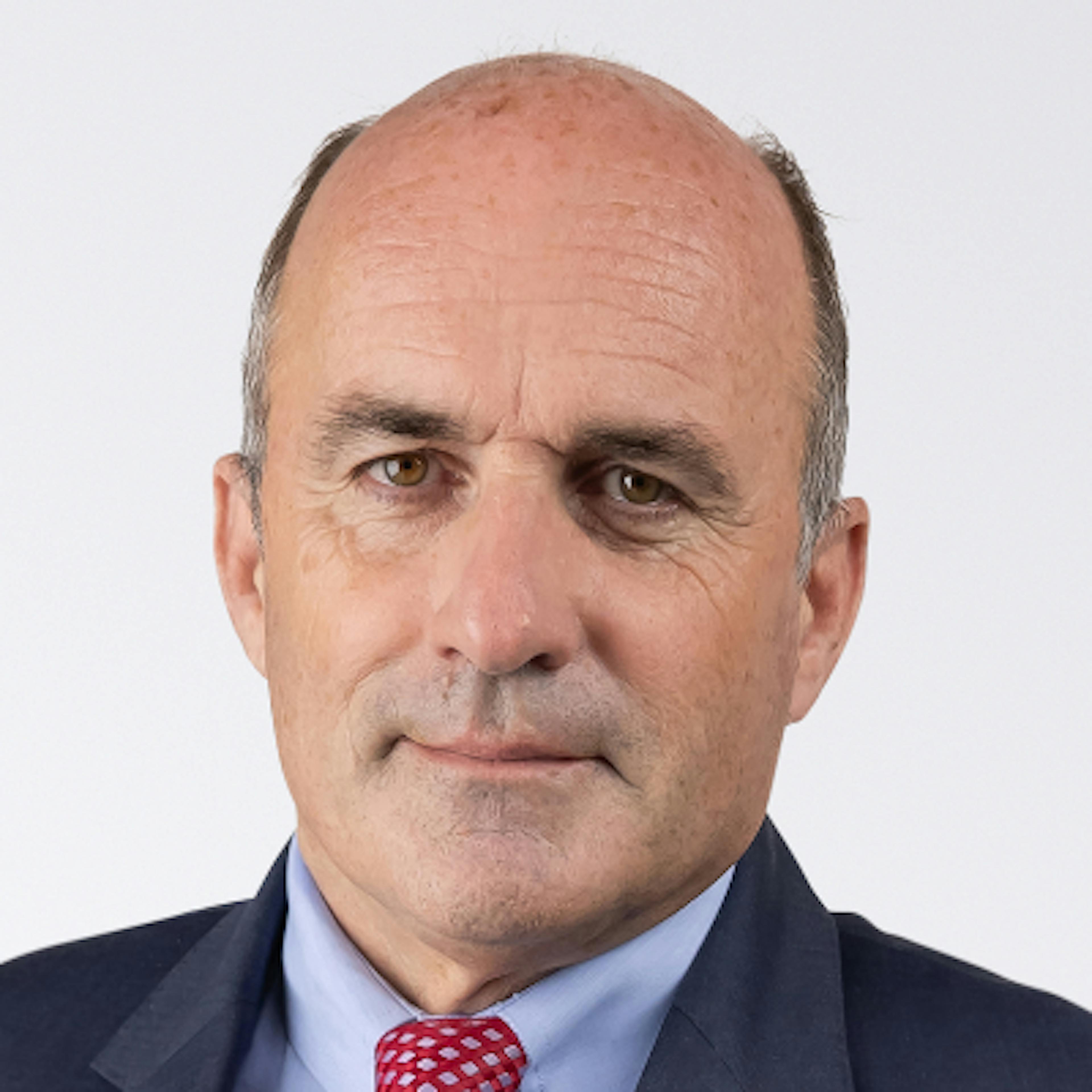
During the second quarter of 2026, Carmignac Investissement Latitude delivered a return of +4.6%, underperforming its reference indicator, which gained +8.2%.
Market environment
The second quarter of 2026 was marked by the temporary closure of the Strait of Hormuz following Israeli and U.S. strikes against Iran. This triggered a spike in inflation, primarily driven by higher energy prices. Combined with disruptions to certain supply chains, these developments weighed on consumption and industrial production, temporarily bringing the global economy closer to a stagflationary scenario. However, the sharp decline in Chinese oil imports, together with the release of strategic petroleum reserves by most major economies, helped prevent a sustained surge in oil prices.
Following the start of U.S.-Iran negotiations and the partial reopening of the Strait of Hormuz, equity markets quickly recovered their losses and reached new record highs. Supported by a strong earnings season, investors continued to concentrate their buying on companies benefiting from the rapid expansion of artificial intelligence (AI). While the sector's leading companies continued to outperform, enthusiasm gradually broadened across the entire semiconductor value chain, resulting in significant performance dispersion and increasingly demanding valuations in certain segments. Emerging markets, particularly South Korea and Taiwan, were among the main beneficiaries of this trend thanks to their strong exposure to the AI ecosystem. Meanwhile, central banks maintained a cautious stance in light of persistent inflationary risks, which limited the upside for bond markets.
How did we fare in this context?
Against this backdrop, the Fund delivered a positive return over the quarter, although it underperformed its reference indicator.
Within the master fund, Carmignac Investissement, stock selection made a positive contribution to performance, with the technology sector acting as the main driver of value creation in both absolute and relative terms. SK Hynix and TSMC were the two largest contributors. Following SK Hynix's exceptional share price appreciation, we took profits on a significant portion of our position, adopting a more cautious stance given the memory chip leader's higher volatility profile. Stock selection within the industrial sector also supported performance, notably through Prysmian and Safran. Conversely, the healthcare and financial services sectors weighed on returns, despite strong contributions from selected holdings such as diagnostic imaging specialist Lantheus and digital payments company Block.
In this environment, characterised by a highly binary market, our equity hedging strategies weighed on quarterly performance. Having proved beneficial during the market correction in March, they were subsequently penalised by the sharp rebound in risk assets, supported by easing geopolitical tensions, the partial reopening of the Strait of Hormuz, and renewed optimism surrounding AI-related stocks. As a result, investor flows once again concentrated across the semiconductor value chain, providing strong support to global equity markets.
Outlook
Markets remain largely driven by momentum, with leadership still highly concentrated and signs of excess emerging across certain AI-related segments. In both the U.S. and Asia, equity market gains have been led primarily by the semiconductor value chain. What initially began as enthusiasm for the leading beneficiaries of AI has gradually broadened to include smaller, lower-quality companies, some of which have seen their share prices double or even triple within a matter of months. In several cases, valuations now appear to discount years of strong growth despite still limited visibility on underlying fundamentals. By contrast, many high-quality companies outside the technology sector remain overlooked by investors, even though their earnings outlook remains robust.
Over the coming months, we believe the market may enter a new phase of the AI cycle. Investors are increasingly questioning how the value created by AI will ultimately be distributed and whether semiconductor and equipment manufacturers will be able to sustain their pricing power over the long term. While these companies continue to benefit from supply chain bottlenecks today, the rising cost of AI infrastructure could gradually weigh on demand. At the same time, the market's focus is shifting towards model efficiency, driven by the emergence of open-source solutions, lower-cost models and more efficient use of computing capacity.
Within the master l fund Carmignac Investissement, we are seeking to build a more balanced portfolio. While maintaining meaningful exposure to the structural beneficiaries of AI—with a preference for the best-positioned companies across the semiconductor value chain—we are gradually increasing our allocation to high-quality businesses trading at attractive valuations. In particular, companies in the healthcare sector (McKesson, Cencora) and financial services (Tradeweb, Mastercard) should benefit from a potential broadening of the market rally and a rotation in market leadership beyond technology stocks alone.
We also believe that the end of hostilities could support global growth against a backdrop of persistent tightness in the U.S. labour market, sustained demand for AI infrastructure and ongoing supply constraints across parts of the semiconductor and memory markets. These factors could keep inflation more resilient than currently anticipated by the consensus and, consequently, lead to a more volatile market environment characterised by more frequent sector rotations. We therefore continue to manage the strategy's equity exposure actively to capitalise on these evolving market dynamics.
1A EUR Acc share class.
250% MSCI AC World NR index + 50% €STR Capitalized index.
3EUR Flexible Allocation - Global.

Carmignac Investissement Latitude
Carmignac Investissement Latitude A EUR Acc
- Duración mínima recomendada de la inversión
- 5 años
- Escala de riesgo*
- 3/7
- Clasificación SFDR**
- Artículo 8
*Escala de riesgo del KID (Documento de datos fundamentales). El riesgo 1 no implica una inversión sin riesgo. Este indicador podría evolucionar con el tiempo. **Reglamento SFDR (Reglamento sobre la divulgación de información relativa a la sostenibilidad en el sector de los servicios financieros, por sus siglas en inglés) 2019/2088. La clasificación SFDR de los Fondos puede evolucionar con el tiempo.
Principales riesgos del Fondo
Gastos
- Costes de entrada
- 4.00% del importe que pagará usted al realizar esta inversión. Se trata de la cantidad máxima que se le cobrará. Carmignac Gestion no cobra costes de entrada. La persona que le venda el producto le comunicará cuánto se le cobrará realmente.
- Costes de salida
- No cobramos una comisión de salida por este producto.
- Comisiones de gestión y otros costes administrativos o de funcionamiento
- 1.80% del valor de su inversión al año. Se trata de una estimación basada en los costes reales del último año.
- Comisiones de rendimiento
- 20.00% max. del exceso de rentabilidad, siempre que la rentabilidad desde el inicio del año supere la rentabilidad del indicador de referencia y no deba recuperarse ninguna rentabilidad inferior pasada. El importe real variará en función de lo buenos que sean los resultados de su inversión. La estimación de los costes agregados anterior incluye la media de los últimos 5 años, o desde la creación del producto si se produjo hace menos de 5 años.
- Costes de operación
- 0.33% del valor de su inversión al año. Se trata de una estimación de los costes en que incurrimos al comprar y vender las inversiones subyacentes del producto. El importe real variará en función de la cantidad que compremos y vendamos.
Rentabilidades
| Carmignac Investissement Latitude | +2.6 | +16.9 | +10.2 | +13.2 | +2.1 | −6.2 | +27.0 | +9.1 | −16.1 | +0.3 |
| Indicador de referencia | +7.7 | +5.1 | +14.2 | +10.5 | −6.6 | +12.9 | +1.8 | +28.9 | −4.8 | +8.9 |
| Carmignac Investissement Latitude | +12.7% | +6.1% | +5.7% |
| Indicador de referencia | +10.4% | +7.0% | +8.7% |
Fuente: Carmignac a 30 de jun. de 2026.
Las rentabilidades históricas no garantizan rentabilidades futuras. La rentabilidad es neta de comisiones (excluyendo las eventuales comisiones de entrada aplicadas por el distribuidor) El fondo no garantiza la preservación del capital.
La rentabilidad puede aumentar o disminuir como consecuencia de las fluctuaciones de las divisas, en el caso de las acciones que no estén cubiertas por divisas.
Indicador de referencia: 50% MSCI AC World NR index + 50% €STR Capitalized Index. Frecuencia de rebalanceo: Trimestral