
Carmignac has been investing in emerging markets since 1989. Most of its competitors were not yet in existence. That heritage shapes everything about how we approach the asset class today.
Carmignac has been investing in emerging markets since 1989
Our first global Equities fund launched that year, offering more than 50% exposure to the asset class and making us one of the earliest European asset managers to take emerging markets seriously as an investment destination. Our first dedicated emerging market equity strategy followed in 1997.
In a complex, heterogeneous and volatile asset class, time spent in the markets leads to accumulated knowledge of how political cycles turn, how currencies behave under stress, how governance norms evolve and how local supply chains function. That knowledge cannot be acquired quickly and it cannot be replicated from a distance.
A team built for the asset class
The emerging equities team at Carmignac sits within a broader investment infrastructure that amplifies its capabilities. At its core are Xavier Hovasse, head of emerging equities with 27 years of experience, and Naomi Waistell, who brought 18 years of specialist expertise when she joined in 2025, supported by dedicated regional analysts, covering the biggest markets.
Around that core sits a structure that extends the team's reach. Sector specialists cover technology, media & telecommunications, healthcare, consumer, industrials and finance. A dedicated sustainable investment function, a front office risk manager, a chief economist and a dedicated emerging market fixed income team all contribute to the investment process.
"Our key resource is our team. We spend 100% of our time looking at and analysing emerging markets," Waistell said. "On top of that, Carmignac has a pool of global industry analysts with a huge amount of expertise by industry. We also have a fixed income team, alongside macro economists who we can talk to about the bigger picture for our markets."
Within our emerging markets equity strategy, Xavier Hovasse and Naomi Waistell focus on companies with durable competitive advantages, strong balance sheets and genuine pricing power. Investment ideas are generated by the team, not by individuals — (and the investments decisions are taken collegially by the two co-fund managers that have ultimate decision making) – a structural choice that reduces key-person risk and broadens the quality of inputs into each decision.
Xavier Hovasse: macro discipline as the foundation
Hovasse joined Carmignac in 2008 as a Latin America analyst, having spent nine years at BNP Paribas Asset Management managing emerging and global equities. He became fund manager in 2011 and holds the CFA charter.
His approach is built on the conviction that getting the macro framework right first helps with getting stock selection right. Economies running large deficits and dependent on foreign capital are avoided; surplus economies with orthodox monetary frameworks are preferred.
"The key variable in asset valuation is the cost of capital," he explains. "We have a very good understanding of the country risk, the currency risk and the balance of payments in every country where we deploy capital."
Having managed through the 2008 crisis, the commodity supercycle, emerging markets' prolonged underperformance of the 2010s and the 2025 revival, Hovasse brings a perspective on the asset class that only time and experience can build.
Naomi Waistell: quality and sustainability as sources of alpha
Waistell, meanwhile, spent a decade at Newton Investment Management before becoming a senior fund manager at Polar Capital specialising in global emerging markets. She holds the CFA charter and an MBA from the University of Cambridge.
She highlights the team's approach to sustainability: "We think that sustainability is actually value accretive and alpha seeking in its own right. We're just putting more information, more fundamental analysis into stock prices upfront."
Every stock in the Carmignac Portfolio Emergents portfolio must be aligned with a UN Sustainable Development Goal and the fund must maintain carbon intensity at least 50% below the MSCI EM index.
In September 2025, Waistell travelled to Taiwan and South Korea, meeting approximately 30 companies across the semiconductor supply chain.
The work deepened the team's understanding of where demand was accelerating, where supply constraints were creating pricing power, and which companies were best placed to benefit as AI infrastructure spending continued to expand.
Building deep knowledge on the ground
Describing the research process, Waistell says: "We travel frequently, we visit emerging markets, we take the temperature of how a country is on the ground, we see the operations, we talk to the whole supply chain, the competitors, suppliers, whatever might give us incremental information. And we take that approach to triangulate the information as we form our investment thesis."
The objective is to test every investment thesis against every source of incremental insight available. That depth of knowledge feeds directly into how positions are sized.
The deliberate narrowness of the resulting portfolio — 35-45 holdings, active share of 80% as of end-March 2026 — is the product of knowing each holding deeply.
Why heritage matters now
The environment that emerging markets are entering in 2026 plays directly to the strengths of a team built this way. The beta phase of the 2025 rally could give way to a more differentiated environment where earnings quality and company fundamentals drive outcomes.
In that environment, knowing companies deeply, having the macro framework to allocate capital to the right countries and having the discipline to act when investment cases change are the core of what makes the difference.
The next cycle in emerging markets may reward accumulated knowledge and disciplined process and Carmignac has been building that knowledge since before most of its competitors existed.

Carmignac Portfolio Emergents
Carmignac Portfolio Emergents F EUR Acc
- Aanbevolen minimale beleggingstermijn
- 5 jaar
- SFDR-fondscategorieën**
- Artikel 9
- Risicoschaal*
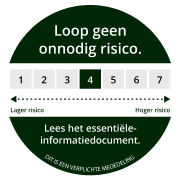
*Risicocategorie van het KID (essentiële-informatiedocument) indicator. Risicocategorie 1 betekent niet dat een belegging risicoloos is. Deze indicator kan in de loop van de tijd veranderen. **De Sustainable Finance Disclosure Regulation (SFDR) 2019/2088. De SFDR-classificatie van de fondsen kan in de loop van de tijd veranderen.
Voornaamste risico's van het Fonds
MARKETING COMMUNICATION. Please refer to the KID/prospectus of the Fund before making any final investment decisions.
This document may not be reproduced, in whole or in part, without prior authorisation from the management company. It does not constitute a subscription offer, nor does it constitute investment advice. The information contained in this document may be partial information and may be modified without prior notice. The Management Company can cease promotion in your country anytime. Investors have access to a summary of their rights in French, English, German, Dutch, Spanish and Italian at the following link (paragraph 5 “Summary of investor rights”): https://www.carmignac.com/en/regulatory-information. The decision to invest in the promoted fund should take into account all its characteristics or objectives as described in its prospectus. Carmignac Portfolio Emergents refers to the sub-funds of Carmignac Portfolio SICAV, an investment company under Luxembourg law, conforming to the UCITS Directive. Past performance is not necessarily indicative of future performance. Performances are net of fees (excluding possible entrance fees charged by the distributor). The return may increase or decrease as a result of currency fluctuations, for the shares which are not currency-hedged. Reference to certain securities and financial instruments is for illustrative purposes to highlight stocks that are or have been included in the portfolios of funds in the Carmignac range. This is not intended to promote direct investment in those instruments, nor does it constitute investment advice. The Management Company is not subject to prohibition on trading in these instruments prior to issuing any communication. The portfolios of Carmignac funds may change without previous notice. Access to the Funds may be subject to restrictions with regard to certain persons or countries. The Funds may not be offered or sold, directly or indirectly, for the benefit or on behalf of a U.S. person, according to the definition of the US Regulation S and/or FATCA. The Funds present a risk of loss of capital. The risk, fees and ongoing charges are described in the KIDs (Key Information Document). The Funds' prospectuses, KIDs, NAV and annual reports are available at www.carmignac.com, or upon request to the Management Company. The KIDs must be made available to the subscriber prior to subscription.
In Switzerland, the Funds’ prospectuses, KIDs and annual reports are available at www.carmignac.com/en-ch or through our representative in Switzerland, CACEIS (Switzerland), S.A., Route de Signy 35, CH-1260 Nyon. The paying agent is CACEIS Bank, Montrouge, succursale de Nyon / Suisse, Route de Signy 35, 1260 Nyon. The KID must be made available to the subscriber prior to subscription.
Carmignac Gestion, 24, place Vendôme - 75001 Paris. Portfolio management company authorised by the AMF - S.A. with a capital of €13,500,000 - Paris Civil Liability B 349 501 676.
Carmignac Gestion Luxembourg, City Link - 7, rue de la Chapelle - L-1325 Luxembourg. Subsidiary of Carmignac Gestion - Investment fund management company approved by the CSSF. S.A. with a capital of 23 000 000 € - R.C.S Luxembourg B 67 549.