

Over the period, Carmignac Investissement recorded a performance of -0.5%, in line with its reference indicator (-0.5%).
Market environment during the period
The S&P 500 peaked on July 31, but fell by approximately 6% by the end of the quarter. The main characteristics of this equity market reversal are the following:
- Valuations have been under pressure following the rise in rates: S&P 500 price/earnings ratio (1-Year forward) has dropped from 20x to 18x. However, at the same time, earnings estimates have held steady.
- The “Big Tech 7”3 that have been driving the market since the beginning of the year are no longer providing strong leadership. This, too, is a valuation story.
- From a sector point of view, following the sharp move in rates, bond proxies (utilities and real estate) have performed poorly. At the opposite end of the spectrum, energy has benefited from the resurgent oil price, while defensive healthcare performed relatively well.
How did we fare in this context ?
During the period, the absolute performance of the Fund suffered from the market correction as well as from some individual convictions. Hermes was down 13% over the quarter after a strong performance since the beginning of the year, penalized by higher rates and decelerating growth in China and Europe. Block, the merchant payments innovator, was also down over the quarter as the company weathered a series of setbacks, including a 48-hour outage on its Square payments app, and the sudden departure of an executive weeks later.
However, despite a negative backdrop for equity markets we managed to generate alpha over the quarter mostly thanks to our stock selection in Healthcare (Novo Nordisk and Eli Lilly) as well as some companies like UBS, Schlumberger and Alibaba.
Outlook
For equity markets, the two key factors to watch for the rest of the year are the rates and earnings dynamics.
On the rates front, the upward pressures on long term rates should ease as the deceleration of the economic cycle is gaining traction and the end of the hiking cycle is finally in sight (even more so as the past weeks’ movements in bond yields are tightening financial conditions even further). Any relief on rates will be positive for equity valuations and therefore corporate earnings will once again become the differentiating factor. However, we believe 2024 earnings expectations may still be overly optimistic, leaving room for downward revisions. Higher interest rates take time to affect earnings – despite wage pressure, corporate margins remain historically high – so the sustainability of this is a question. At this point it seems we are likely to face downward revisions in earnings expectations.
In this environment, quality growth companies offering higher and stable profit margins over time, as well as powerful secular trends such as artificial intelligence (AI) and the fight against obesity should be performance differentiators.
The healthcare sector is still our main overweight in the fund with Eli Lilly as our largest holding. Over the quarter, we had further positive developments regarding weight loss drugs. During late-stage trial preliminary results, Eli Lilly’s comparable Novo Nordisk was able to show a 20% reduction in cardiovascular events, i.e. heart attacks / strokes, for people treated with weight loss drugs vs. a placebo. These results are derisking the forward adoption curve for these drugs, expanding the addressable market that we estimate could reach $100bn in peak sales by the early 2030s.
To diversify our portfolio and to adapt to a stickier inflationary/higher interest rate backdrop than over the previous decade, we maintain an exposure to growth companies but within a wider set of sectors. Over the last year, we have reinforced our investments in the industrial sector in which we are very selective: avoiding short cycle exposure to favor long cycle plays. Airbus, the leading supplier in a secularly growing commercial aerospace market, is our biggest weight in the sector. A tight aircraft supply market given strong structural travel trends will provide a solid demand backdrop as Airbus ramps up production at a higher margin than during the pre-COVID era.
1Source: Carmignac 30/09/2023.
2Reference indicator: MSCI AC WORLD NR.
3Big Tech 7 : Alphabet, Apple, Amazon, Meta, Microsoft, Nvidia and Tesla

Carmignac Investissement A EUR Acc
- Aanbevolen minimale beleggingstermijn
- 5 jaar
- SFDR-fondscategorieën**
- Artikel 8
- Risicoschaal*
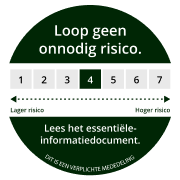
*Risicocategorie van het KID (essentiële-informatiedocument) indicator. Risicocategorie 1 betekent niet dat een belegging risicoloos is. Deze indicator kan in de loop van de tijd veranderen. **De Sustainable Finance Disclosure Regulation (SFDR) 2019/2088. De SFDR-classificatie van de fondsen kan in de loop van de tijd veranderen.
Voornaamste risico's van het Fonds
Kosten
- Instapkosten
- 4,00% van het bedrag dat u betaalt wanneer u in deze belegging instapt. Dit is het hoogste bedrag dat u in rekening zal worden gebracht. Carmignac Gestion brengt geen instapkosten in rekening. De persoon die verantwoordelijk is voor de verkoop van het product zal u informeren over de feitelijke kosten.
- Uitstapkosten
- Wij brengen voor dit product geen uitstapkosten in rekening.
- Beheerskosten en andere administratie - of exploitatiekos ten
- 1,80% van de waarde van uw belegging per jaar. Dit is een schatting op basis van de feitelijke kosten over het afgelopen jaar.
- Prestatievergoedingen
- 20,00% max. van de meerprestatie als het rendement sinds het begin van het boekjaar hoger is dan dat van de referentie-indicator en er geen minderprestatie uit het verleden meer moet worden goedgemaakt. Het feitelijke bedrag zal variëren naargelang van de prestaties van uw belegging. De schatting van de totale kosten hierboven omvat het gemiddelde over de afgelopen vijf jaar, of sinds de introductie van het product als dat minder dan vijf jaar geleden is.
- Transactiekosten
- 0,35% van de waarde van uw belegging per jaar. Dit is een schatting van de kosten die ontstaan wanneer we de onderliggende beleggingen voor het product kopen en verkopen. Het feitelijke bedrag zal variëren naargelang hoeveel we kopen en verkopen.
Rendement
| Carmignac Investissement | +19,9 | +17,4 | +25,0 | +18,9 | −18,3 | +4,0 | +33,7 | +24,7 | −14,2 | +4,8 |
| Referentie-indicator | +17,0 | +7,9 | +25,3 | +18,1 | −13,0 | +27,5 | +6,7 | +28,9 | −4,8 | +8,9 |
| Carmignac Investissement | +24,5% | +9,8% | +10,6% |
| Referentie-indicator | +20,1% | +10,9% | +12,2% |
Bron: Carmignac op 30 okt. 2026.
In het verleden behaalde resultaten zijn geen garantie voor de toekomst. De resultaten zijn netto na aftrek van kosten (inclusief mogelijke in rekening gebrachte instapkosten door de distributeur) . Het fonds houdt een risico op kapitaalverlies in.
Het rendement kan stijgen of dalen als gevolg van valutaschommelingen voor de aandelen die niet valutadekkend zijn.
Referentie-indicator: MSCI AC World NR index